


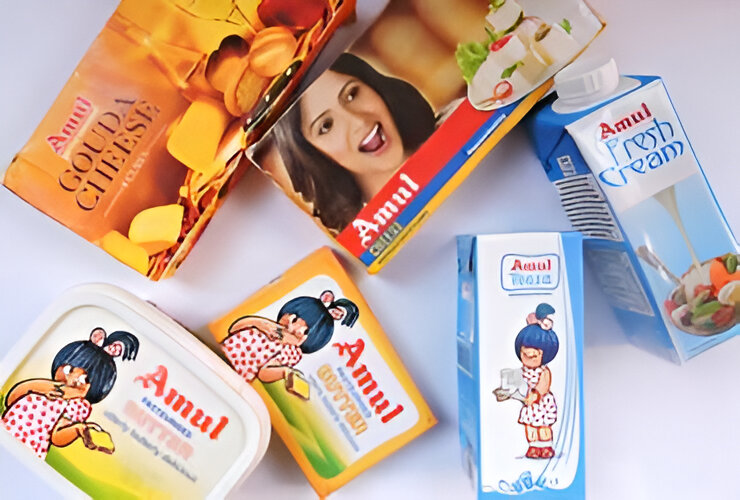
In the heart of Gujarat, a state in India, lies the village of Anand. To many, it might seem like just another dot on the map, but to the discerning eye, it’s the birthplace of a revolution. A revolution that began with the grievances of marginal milk farmers and culminated in the creation of one of India’s most beloved brands: Amul.
The Genesis of a Movement
The story dates back to pre-Independence India. The milk farmers of Anand were tired of the exploitation they faced due to unfair trade practices. Under the visionary leadership of farmer leader Tribhuvandas Patel, these farmers united in protest. They went on a strike, forming their own co-operative to collect and process milk, initially named the Kaira District Co-operative Milk Producer’s Union.
The co-operative’s success was not just due to the farmers’ unity but also the expertise of professionals like Dr. Verghese Kurien and HM Dalaya, who were brought on board to manage and run the operations. Their combined efforts transformed the Kaira Union into a national institution. By 1955, the Kaira Union was rebranded as Amul, a name that would soon become synonymous with quality dairy products across India.
The White Revolution
In 1964, a significant event occurred that would shape the future of dairy farming in India. Lal Bahadur Shastri, India’s then Prime Minister, visited a farm in Gujarat. The farmer, Ramabhai, and his family, unaware of Shastri’s esteemed position, shared their experiences with the co-operative. Deeply impressed, Shastri urged Dr. Kurien to replicate this co-operative model across India.
This movement, which began in Anand, soon spread across the country, turning India from a milk-deficient nation to the world’s largest milk producer. This transformation was aptly named the “White Revolution.”
The Amul Moppet: An Icon is Born
While Amul’s products were undeniably top-notch, Dr. Kurien understood the power of branding and advertising. He brought on board daCunha Communications Pvt. Ltd., led by Sylvester daCunha, to craft a memorable campaign. The result? The creation of the Amul moppet or the Amul girl, a lovable mascot that gave a feisty and progressive spin to Indian news. This campaign not only made Amul a recognizable brand but also solidified its place in the hearts of millions.
Amul Today: A Testament to Resilience
Amul’s journey has been nothing short of extraordinary. Over the past decade, it has consistently exceeded performance expectations, recording a Compound Annual Growth Rate (CAGR) of 17.5% for nine years. Even in the face of global challenges like the COVID-19 pandemic, when many established businesses faltered, Amul stood strong. Its revenue growth expectations for 2020 were an impressive 15-16%.
The brand’s resilience can be attributed to its unique farmer co-operative model. Even during India’s extended lockdown, Amul’s efficient supply chains ensured that customers had uninterrupted access to their favorite dairy products.
Amul’s story is a testament to the power of unity, vision, and innovation. It showcases how, by catering to both ends of the business spectrum – the dairy farmers and the customers – one can build an iconic brand. Today, Amul is not just a brand; it’s a legacy, an institution, and a shining example of how businesses can thrive with a heart.
